Formula Guides
Understanding Supplement Labels, One Section at a Time
In Short
A supplement label has four parts worth reading in order: the front claim, the Supplement Facts panel, the other ingredients and the directions for use.
Once you know what each part is for, comparing products becomes much less confusing.
Start With the Front of the Bottle
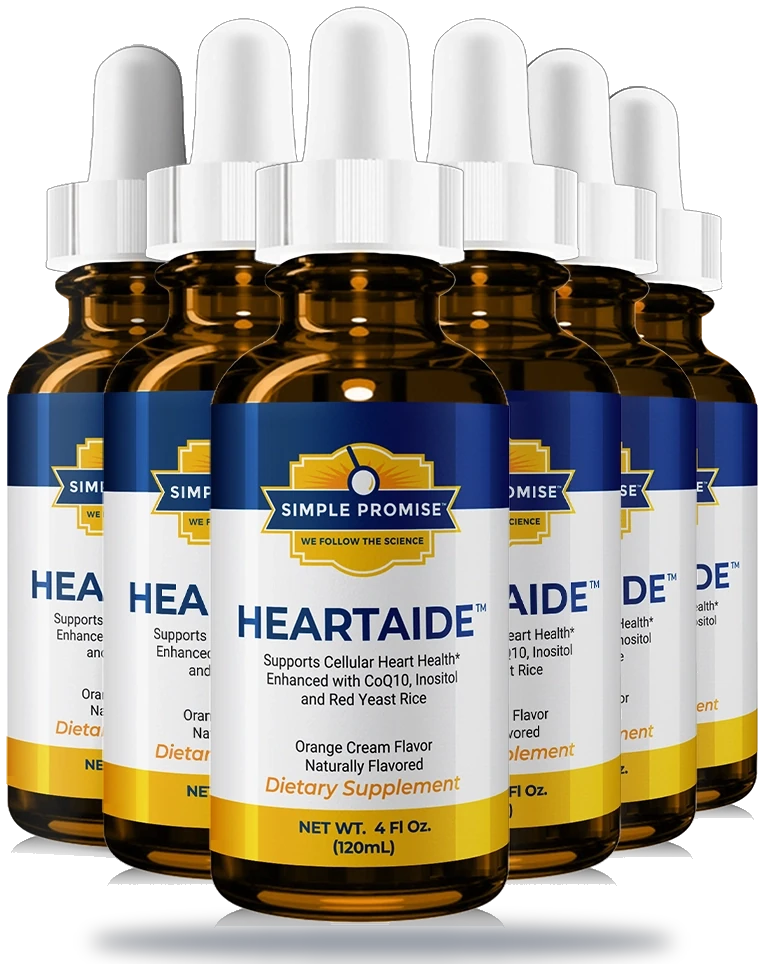
The front label is a headline, not a contract. It carries the product name, a short statement of purpose and often an "enhanced with" line naming key ingredients. On a Heartaide bottle, for example, you will see the name, the phrase "Supports Cellular Heart Health*" and a line naming CoQ10, inositol and red yeast rice. The asterisk points to a statement elsewhere on the label, which is your cue to keep reading.Find the Supplement Facts Panel
This boxed panel is the most informative part of any label. It follows a standard layout:- Serving size: the amount the amounts below refer to.
- Servings per container: how long the bottle should last.
- Ingredient list with amounts: what is inside and how much.
- Percent Daily Value: shown for nutrients that have an established reference amount; many ingredients show a dagger or no value at all.
If a number looks surprising, check the serving size first. A large amount per serving can look modest, or the reverse, depending on how the serving is defined.
Watch for Proprietary Blends
Some products list several ingredients under a single "proprietary blend" heading with one combined amount. That makes it impossible to see how much of each is present. It is not wrong, but it limits comparison. When you can, favor a panel that prints each ingredient with its own amount, as printed on the bottle.Read the Other Ingredients
Below the panel you will see "other ingredients." These are the supporting components: water, natural flavors, sweeteners, preservatives or binders, depending on the format. For a liquid, expect water and flavoring. Reading this line helps you spot anything you prefer to avoid, such as artificial colors or added sugar.Understand the Asterisk and the Disclaimer
Supports-style claims are paired with the statement that the claim has not been evaluated by the FDA and that the product is not intended for any specific health purpose beyond what the label states. This is a legal standard across the category, not a sign that something is wrong. It simply tells you that supplements are labeled differently from other products.Directions and Audience
The directions for use tell you how to take the product, and they are printed on the bottle, so follow them as written. With a liquid, the directions apply to drops taken from the dropper or added to a glass of water. Also look for who the product is intended for. Heartaide is for adults 18 and older.If you want more on the liquid format, see liquid supplements explained.
Look for Quality Cues
A few extra details separate careful makers from casual ones:- A named manufacturer or distributor with a contact address.
- A statement of where the product is made, such as "Made in the USA."
- Good manufacturing practices (GMP) compliance for the facility.
- A lot number and an expiration or best-by date.
Heartaide is made in the USA in a GMP-compliant facility. You can read more about manufacturing in quality and manufacturing standards.