Red Yeast Rice Explained for Careful Label Readers
Red yeast rice is ordinary rice that has been fermented with a type of yeast, giving it a deep reddish color and a long history in Asian cooking and food traditions.
Here is what it is, where it comes from and what to look for when it appears on a label.
A Food With a Long Backstory
Red yeast rice is not a laboratory invention. It is rice, usually white rice, that has been fermented with a yeast from the Monascus family. The fermentation turns the grains a brick-red or purplish color. In parts of China, Japan and Southeast Asia it has been used for centuries as a food colorant, a flavoring in rice wine and a traditional ingredient in regional cooking.That culinary history is useful context, because it shows the ingredient began life in the kitchen. Supplement makers later took an interest in it, and today it appears on many heart-focused labels.
How It Is Made
The basic process is simple, even if the details vary by producer:- Rice is cleaned, soaked and steamed.
- The cooked rice is inoculated with the yeast.
- It ferments for several days under controlled temperature and humidity.
- The finished rice is dried and ground into a powder or processed into an extract.
Because it is a fermented product, consistency depends on the producer. That is one reason manufacturing standards matter so much for this ingredient in particular.
Why It Appears on Heart Health Labels
People searching for heart and circulation wellness products often come across red yeast rice because it is a recognizable, long-established name. It is one of the ingredients associated with the "enhanced with" lines you see on the front of bottles. As with any ingredient, the name on the front tells you what is included; the Supplement Facts panel tells you how much.Reading It on a Label
Red yeast rice can appear in a few ways, so a careful read helps. Here is what to look for:The listed form
Check whether the panel lists red yeast rice powder, a standardized extract or a fermented rice blend. The wording tells you how the ingredient was prepared.The printed amount
Amounts differ between products, so compare them on the panel rather than guessing. If an amount is hidden inside a proprietary blend total, you cannot compare it properly.The manufacturer
Because fermentation is sensitive to conditions, favor makers who name their facility standards and country of production. Good manufacturing practices (GMP) cover cleanliness, handling and record keeping, and are a reasonable baseline to look for.Common Questions People Ask
Is it a food or a supplement? It began as a fermented food ingredient and now appears in dietary supplements. Supplements are labeled differently from other categories, and the label should make clear what the product is.Do all products contain the same thing? No. Different strains, fermentation methods and processing steps produce different products, which is why the panel and the manufacturer matter.
Is it a replacement for healthy habits? Not at all. Healthy cholesterol levels already within the normal range are shaped largely by what you eat, how much you move and how well you sleep, so the supplement sits alongside those habits.
Where Heartaide Fits
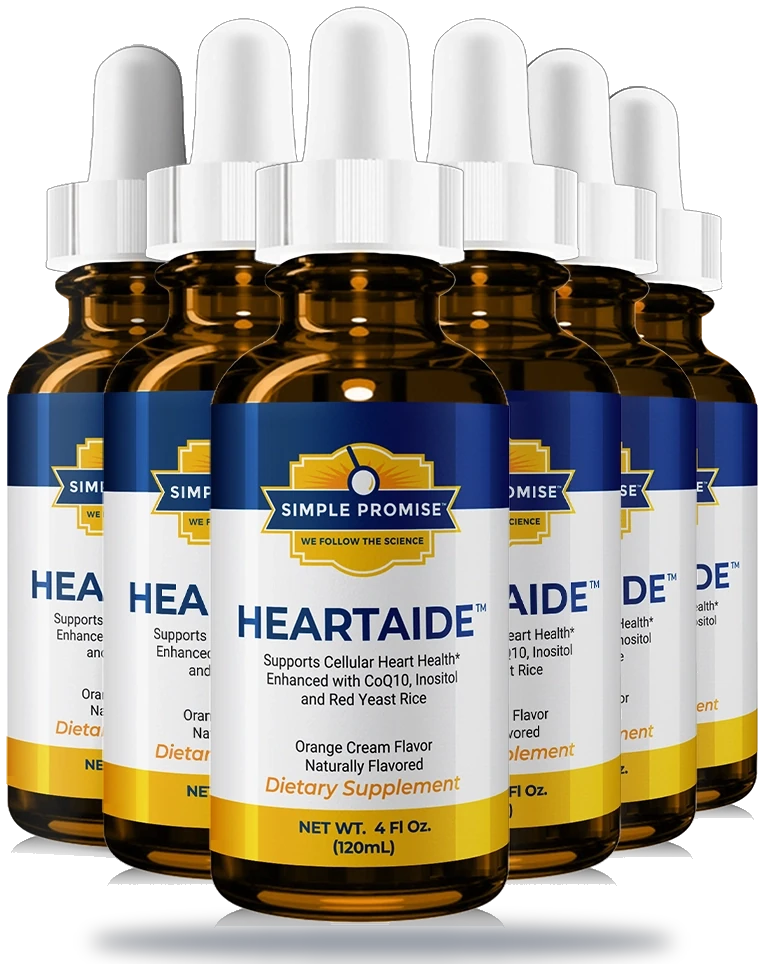
Heartaide is a liquid dropper supplement enhanced with CoQ10, inositol and red yeast rice. It comes in a 4 fl oz amber glass bottle with a white dropper cap and an orange cream flavor, and the complete Supplement Facts panel is printed on the bottle. It is made in the USA in a GMP-compliant facility. If you want to read about the other headline names, see CoQ10 and inositol explained, or browse the ingredients page.Directions are simple: take it as directed on the bottle label, from the dropper or stirred into a glass of water. It is intended for adults 18 and older.
Pairing Any Supplement With a Routine
A supplement works best when it has a home in your day. Some people keep the bottle beside their water glass in the morning; others pair it with an evening wind-down. Our piece on habit stacking for wellness offers easy ways to make a daily step stick without adding stress.A Few Practical Shopping Tips
When you compare red yeast rice products, take a minute to read beyond the front label. Look at the form listed, the printed amount, the manufacturer and the return policy. Ask yourself whether the company explains where it is made and how. A brand that answers those questions plainly is usually easier to trust than one that leans on big claims.It also helps to keep expectations steady. Any supplement is a small, supportive step, and the real work still happens at the table, on the walking path and in bed at a reasonable hour.